No. 268Health4 minviews 103
Published by GK Library Annex
Why do we make earwax, and why does it differ from person to person?
What earwax really is, how it protects the ear, and the gene that decides whether it is dry or wet.
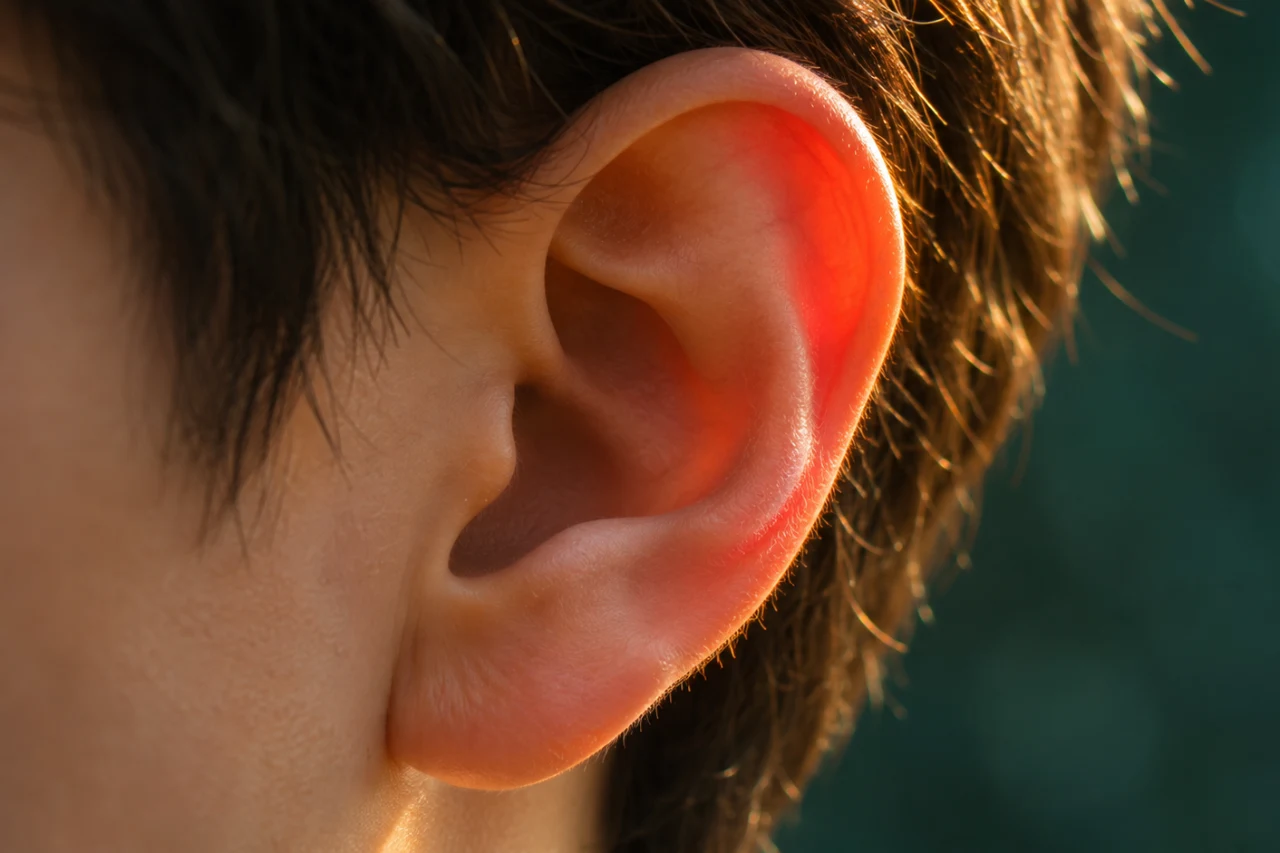
When you wipe your ears, some people find dry, crumbly flakes, while others find a sticky brown lump. Both are normal. Earwax is not dirt; it is a substance the ear makes to protect itself, and whether it turns out dry or wet is decided by a single DNA base in one gene. And most people in Korea have dry earwax.
What is earwax made of?
In English it is called “earwax,” but it is not real wax. The skin of the ear canal, the passage that runs from the ear opening to the eardrum, has two kinds of glands. Sebaceous glands attached to hair roots release oil that keeps the skin moist, and ceruminous glands, which are modified sweat glands, release substances that fight bacteria and fungi. Mix in shed skin cells and hairs, and you have earwax.
Earwax coats the walls of the ear canal in a thin layer that repels water and keeps the skin from drying out. Trapping dust before it can reach the eardrum is also part of its job. So having a little earwax is closer to a sign that your ear is doing its work.
The ear cleans itself
The skin of the ear canal does not stay still. Skin cells near the eardrum slowly move outward toward the ear opening at a rate of about 0.05 mm per day. Like a slow conveyor belt, it carries earwax and dust outward. The jaw, which moves when you chew or talk, also helps push earwax toward the outside. Once earwax reaches the opening, it falls out on its own or washes away when you bathe.
That is why most people do not need to dig wax out of their ears. Putting a cotton swab or a small tool deep inside can instead push the wax further in and cause a blockage, or injure the skin of the ear canal. Mayo Clinic and Cleveland Clinic recommend gently wiping only the outer ear and the entrance of the ear canal with a towel. If your ear feels blocked or painful, or there is a smell or discharge, it is best to have it checked by a doctor.
Dry earwax, wet earwax
Earwax comes in two main types: wet earwax, which is sticky and yellow or brown, and dry earwax, which is grayish and crumbles easily. Which one you get is decided by a single DNA base in a gene called ABCC11. This was reported in 2006 by a research team led by Koh-ichiro Yoshiura at Nagasaki University in Japan, who studied 33 population groups around the world and published the findings in the international journal Nature Genetics.
Wet earwax is dominant, so inheriting just one wet-type copy of the gene from a parent is enough to have wet earwax. Dry earwax appears only when both copies are the dry type. Wet earwax is common among people of European and African descent, while dry earwax is common in East Asia. In particular, nearly all Koreans and Northern Han Chinese had the dry type. The researchers concluded that wet earwax was probably the original form before humans left Africa. The same gene is also linked to underarm sweat odor, and groups with more dry earwax tend to have less underarm odor.
Earwax is a substance the ear canal makes to protect the ear, so it moves outward on its own, and whether it is dry or wet is decided by a single DNA base in the ABCC11 gene.
Notes and references · Cleveland Clinic, “Earwax” · Yoshiura et al. (2006). Based on health information from Cleveland Clinic and Mayo Clinic on the makeup and role of earwax and how it moves outward on its own, and the 2006 Nature Genetics paper that identified the ABCC11 gene as the determinant of earwax type.
Editorial standardsReport an error
Quick quiz