No. 174Everyday life3 minviews 153
Published by GK Library Annex
How does a shake-to-heat hand warmer get hot?
What the iron powder, salt and charcoal do, why spent warmers harden, and burns from mere warmth
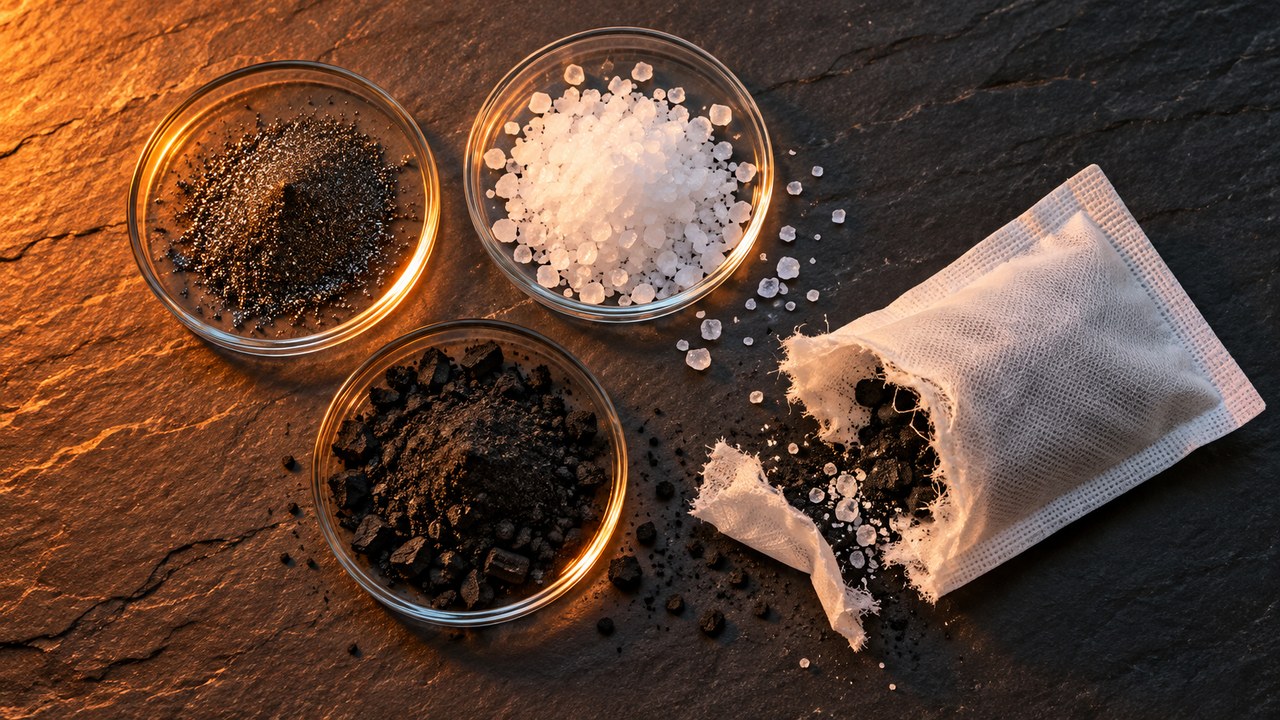
A hand warmer you shake in your pocket heats up because the iron powder inside is rusting. Iron gives off heat when it meets oxygen in the air and rusts, and a hand warmer is a product designed to make that rusting happen very fast on purpose.
Rusting releases heat
A nail or an iron gate actually gives off heat as it rusts, too. It just rusts so slowly, over months or years, that you never feel any warmth.
In an experiment where the Korea Consumer Agency cut open hand warmers, the powder type turned out to contain very fine iron powder along with charcoal (activated carbon), vermiculite, sawdust, salt and water. The finer the powder, the more surface touches the air; the salt water speeds up rusting; and the charcoal holds air and keeps oxygen next to the iron. So rust that would take years forms in a few hours, releasing enough heat to warm your hands.
Shaking lets the air in
A hand warmer sits in an airtight outer wrapper, and the reaction starts the moment you open it. The inner non-woven pouch is made to let air pass in little by little. Shaking simply loosens clumped powder so air reaches it evenly, so there is no need to rub it hard. The Consumer Agency also warns that rubbing too hard can tear the pouch and let the contents leak.
A used-up warmer turning hard is a sign that the iron powder has become rust. Iron that has rusted cannot make heat again, so a cold, spent warmer will not warm up no matter how much you shake it. Click-type liquid warmers work differently. They give off heat as a sodium acetate solution solidifies, so you can melt them in boiling water and use them again.
Even warm can burn over time
Hand warmers feel warm rather than hot, so it is easy to let your guard down. But according to the Consumer Agency, they reach up to 70°C, stay at 40 to 70°C for a long time, and can keep heating for more than 10 hours. A low-temperature burn is the kind of burn that happens when skin touches something that does not feel hot for tens of minutes or more.
Of 226 hand-warmer incidents reported to the agency from 2015 to June 2018, 197 were burns, and among the 128 cases where severity was known, 92.2% were second- or third-degree burns. In one case, a person stuck a warmer over a cotton T-shirt, went out for about an hour, and got a second-degree burn. It is best not to stick one directly on bare skin, and not to use one while sleeping or together with an electric heating pad.
A hand warmer gets warm from the heat of iron powder rusting within a few hours. Even if it only feels warm, do not keep it on one spot for long.
Notes and references · Korea Consumer Agency safety alert on hand-warmer low-temperature burns. Based on the Dec. 5, 2018 release (226 incidents, 2015 to June 2018). The mechanism follows a Korean government Safety TV video of the agency's experiment. Products vary.
Editorial standardsReport an error
Quick quiz