No. 247Nature4 minviews 156
Published by GK Library Annex
Why don't ducks' feet freeze on ice?
Blood flowing to the feet and blood flowing back trade heat, and the feet themselves are built to handle the cold.
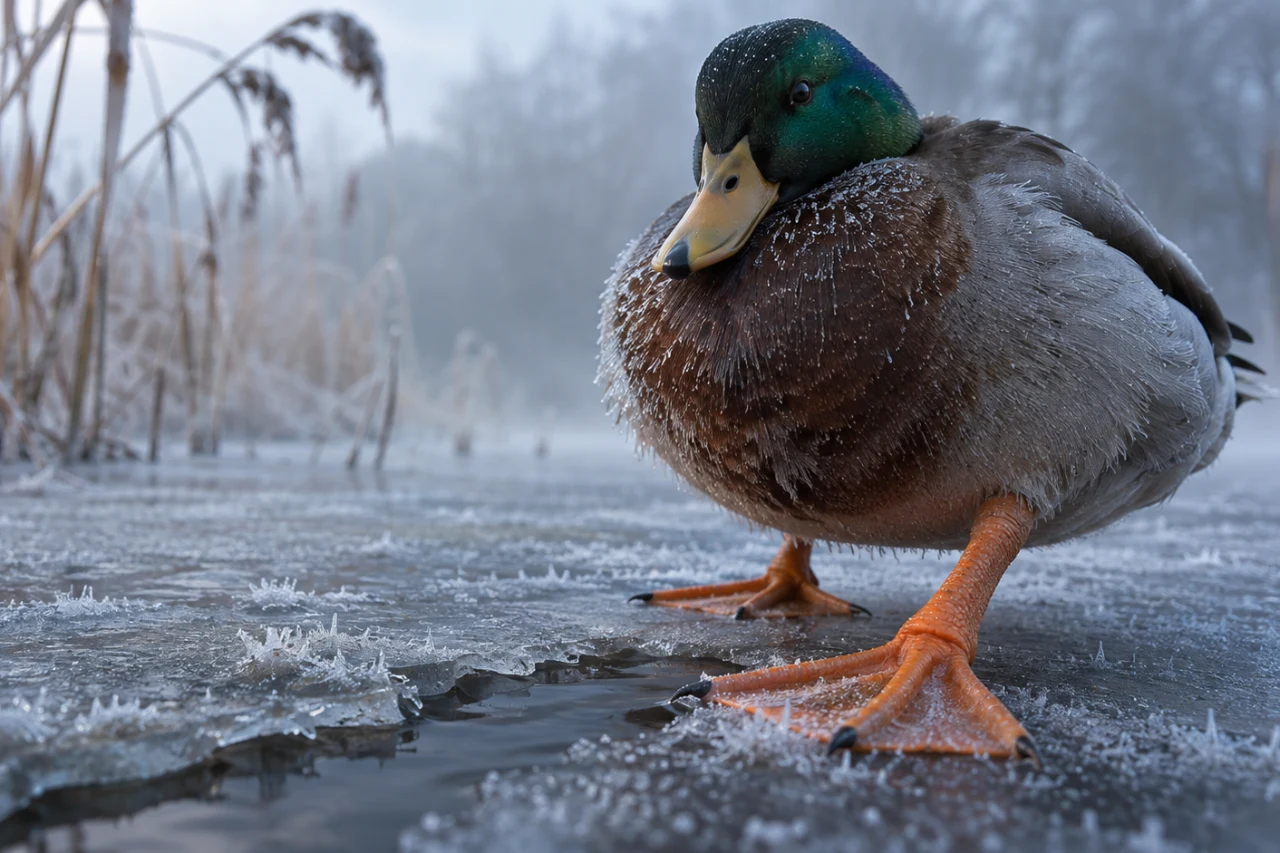
Visit a pond on a winter morning and you may see a duck standing barefoot on thin ice, or calmly paddling through ice-cold water. A person standing barefoot for just a few minutes would feel their feet sting and ache, so why don't a duck's feet freeze? It isn't because duck feet are especially warm. In fact, ducks get through the cold by letting their feet stay cold.
The feet are kept cold on purpose
A bird's core body temperature is high, usually above 38°C. Keeping that temperature all the way to the tips of the toes would mean constantly losing heat to ice and cold water, and the bird would have to eat more food to make up for the lost energy. So waterbirds such as ducks and gulls keep their bodies warm while letting their legs and feet cool down, just enough not to freeze. The Cornell Lab of Ornithology in the United States explains that the feet of these birds can cool to near freezing.
When the feet are cold, the temperature difference between them and the ice or cold water is smaller, so less heat escapes. It's the same principle as a hot pot cooling faster than a lukewarm one. Instead of heating the whole body, the bird keeps warm only where it really matters.
Outgoing and returning blood share heat
Then wouldn't the blood coming back from the cold feet chill the body? This is where the unusual structure of a bird's leg comes in. In a duck's leg, the arteries carrying blood down from the heart to the feet and the veins carrying blood back up to the body run side by side, pressed close together. As the warm arterial blood flows down, its heat passes into the cold venous blood right next to it.
As a result, the blood that reaches the feet has already cooled a lot, so it has little heat to lose to the ice, and the blood returning to the body is rewarmed on its way up, so it doesn't chill the core. This exchange of heat between two flows moving in opposite directions is called countercurrent heat exchange. Even so, if the feet get so cold that they risk freezing, the bird occasionally sends more blood to them to warm them slightly.
The feet themselves are tough
A duck's feet have almost no muscle. They are made mostly of tendons, bones and scale-covered skin, and they have few nerves. The muscles that move the toes sit in the upper part of the leg, covered by feathers, and long tendons run down to the toes like cords to pass on the movement. Because the tissue holds little water, it is also less likely to be damaged by freezing.
Birds protect their feet through behavior, too. They stand on one leg and tuck the other foot into the feathers on their belly to warm it, switching feet from time to time. They may also crouch down so their feathers cover their feet. The human body also has places where arteries and veins run close together, but they can't protect our feet the way a bird's legs do, so standing barefoot on ice for a long time can give you frostbite.
Ducks let their feet cool to near freezing, and arteries and veins running side by side trade heat to cut heat loss. With little muscle or nerve tissue, their feet also cope well with the cold.
Notes and references · Cornell Lab of Ornithology, All About Birds. The articles "How Do Gulls Deal With Cold Feet?" and "Why don't birds get cold feet?" explain countercurrent heat exchange in birds' legs and the structure of their feet.
Editorial standardsReport an error
Quick quiz