No. 288Language4 minviews 3
Published by GK Library Annex
Where does the word "robot" come from?
A word born in a Czech play 100 years ago, with a meaning close to "hard work"
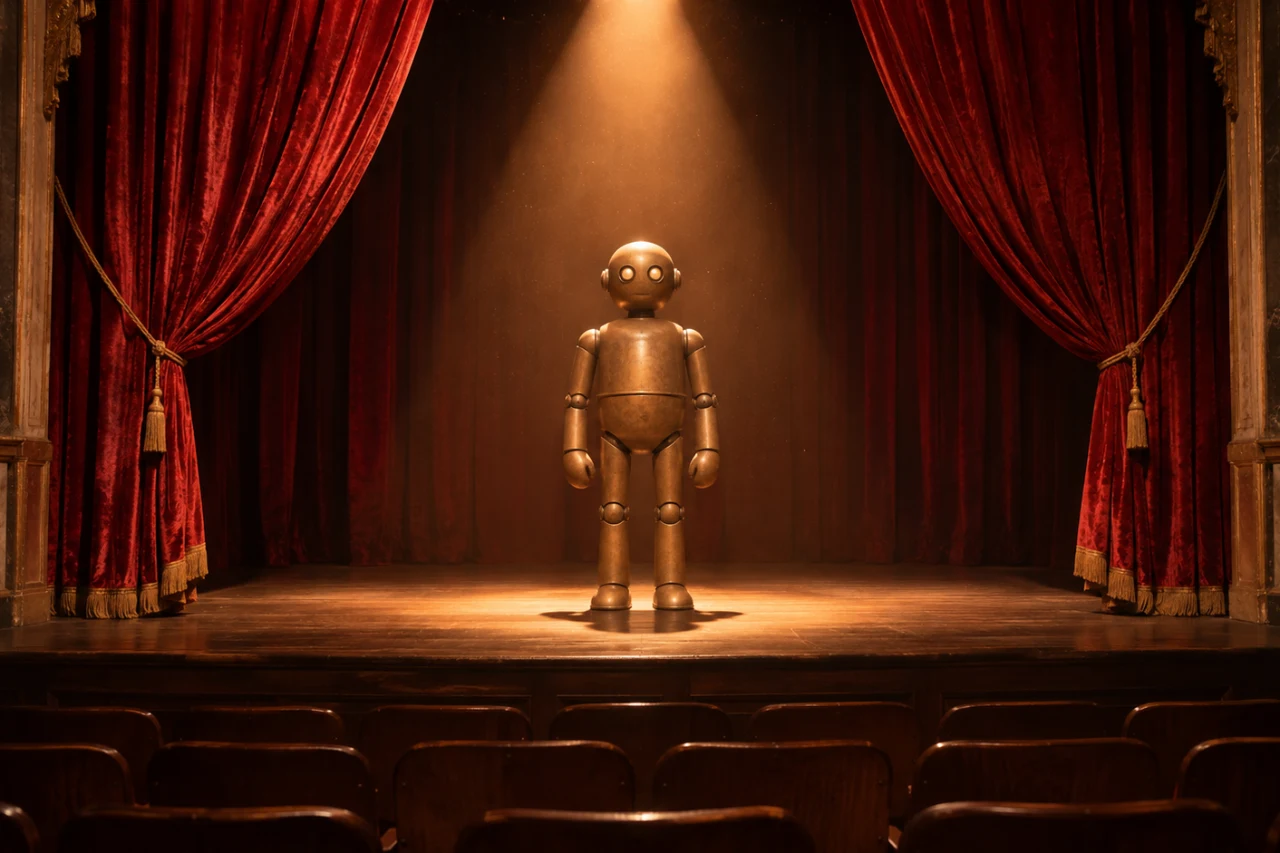
We call them all robots, from the welding arms in factories to the vacuum cleaners that roam our homes. Yet this word was not coined by a scientist or an engineer. It first appeared in a play written in 1920 by a Czech author, and it spread around the world from the stage.
The artificial workers of "R.U.R."
In 1920 the Czech writer Karel Čapek published the play "R.U.R." The title is the initials of a company name, "Rossum's Universal Robots." The company mass-produces and sells artificial workers to do hard, dull work in place of people. In the play, these workers are called "robots."
In January 1921 an amateur theater group in Czechoslovakia staged it first, and it became widely known through the performance at the National Theatre in Prague on January 25. The following year, 1922, it was performed on Broadway in New York, and in 1923 in London as well. The American dictionary Merriam-Webster gives 1922 as the year robot was first used in English.
A name suggested by his brother
The first name Čapek thought of was not robot. According to an article presented by the Czech Ministry of Foreign Affairs, he considered the name "Labors," taken from the English word labor and its Latin root, but he was not satisfied with it. So he asked his older brother Josef Čapek, a painter, and Josef, who was busy painting, reportedly replied, "Call them robots."
Robot comes from the Czech word robota. Merriam-Webster defines it as "compulsory labor," and Encyclopaedia Britannica also explains that robot came from the Czech word for "forced labour." The Czech Foreign Ministry article adds that the word carries a strong sense of the obligatory labor once owed by serfs.
The first robots were not metal
Today the word robot easily brings to mind a metal body and cogwheels. But the robots Čapek imagined were not that kind of machine. In a 1935 newspaper column, Čapek explained that his robots were not made of sheet metal and cogwheels, but of a new organic substance created by chemical synthesis. The robots in the play were, in effect, beings that resembled humans.
In the story, the robots eventually rise up against people. The play is said to have been translated into 30 languages within a few years of its release, and the word robot spread along with it. A single Czech word is now used with almost the same sound in many languages.
Robot is a word first used in Čapek's 1920 play, and it comes from the Czech word robota, meaning "forced labor."
Notes and references · Merriam-Webster, Czech Ministry of Foreign Affairs, IEEE Spectrum. Merriam-Webster dictionary, etymology of "robot"; Britannica, "R.U.R."; Czech Ministry of Foreign Affairs, "100 Years Ago, Robot Was Born" (2021); IEEE Spectrum, excerpt of Čapek's 1935 column (2024).
Editorial standardsReport an error
Quick quiz