No. 220Nature3 minviews 72
Published by GK Library Annex
Ice is clear, so why is snow white?
One snow grain is clear as glass, yet a pile looks white
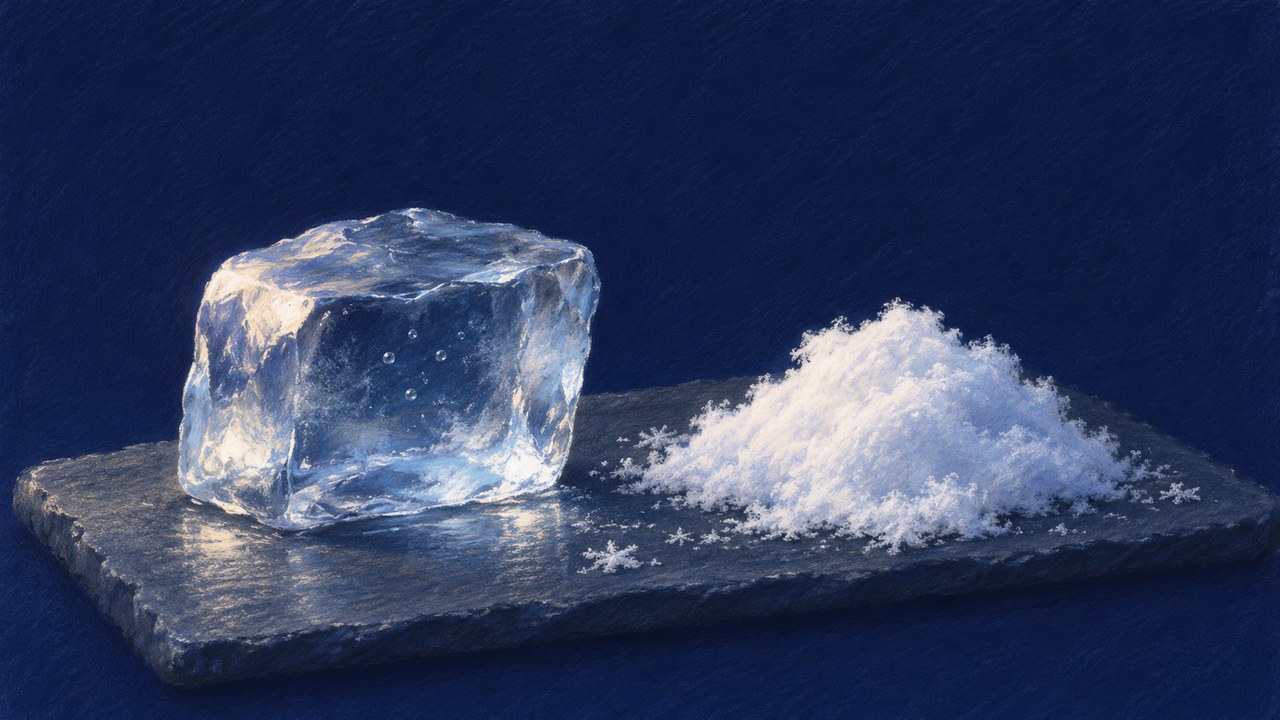
Snow is made of ice, and ice is clear, yet piled-up snow looks white. Light bounces around inside snow countless times, and every color comes back out mixed together.
One grain is clear as glass
Look closely at a snowflake and you will not find white powder, only clear ice crystals. There is no white pigment in it, and each crystal is as clear as a shard of glass. It is the same material as the transparent block of ice you take out of the freezer.
The difference is that a block of ice is one continuous piece, so light passes through almost unchanged. Snow is a huge number of tiny crystals with air packed between them. That difference splits the colors apart. Crush ice with a mallet and the clear lump turns white in no time, for the same reason.
Light bounces and mixes
Each time light crosses a boundary between ice and air, part of it is reflected and part of it bends inward. Snow holds countless such boundaries, so light bounces this way and that and most of it eventually comes back out. Ice returns visible light in almost equal amounts whatever the color. When all colors come back in similar proportions, the human eye sees white. Surface snow in Antarctica is said to send back 96 to 99 percent of visible light, depending on wavelength, which is nearly all of it.
Broken glass looks white for the same reason. A cracked chunk of ice shows white only along the cracks, which is the same effect. When many clear surfaces overlap with air between them, the light turns colorless white.
Deep inside, snow looks bluish
Ice absorbs red light very slightly more than blue light. Near the surface, light only bounces a few times before leaving, so the difference does not show. But light that has traveled about a meter leaves with more blue left in it. That is why you may see a bluish glow if you dig a deep hole in snow and look inside.
So what sets the color of snow is not a pigment but how far the light has traveled. The surface is white, and deep down some blue mixes in. Old snow whose grains have grown coarse returns less light, so it tends to look a little less white than fresh snow.
Snow is white not because of a pigment but because light of every color bounces evenly among clear ice grains.
Notes and references · NSIDC Science of Snow, Caltech Snow Crystals FAQ. NSIDC "Science of Snow", Caltech "Snow Crystals FAQ", Phil. Trans. R. Soc. A 377 (2019) "Optical properties of ice and snow". Blue shows only in snow a meter or more deep.
Editorial standardsReport an error
Quick quiz